Labneh and za’atar croissant, LaCafé Nazareth’s weekend special
A croissant with labneh, za’atar, and cucumber for the weekend at LaCafé in Nazareth. Follow that first bite back to Ziryab and try five recipes at home.
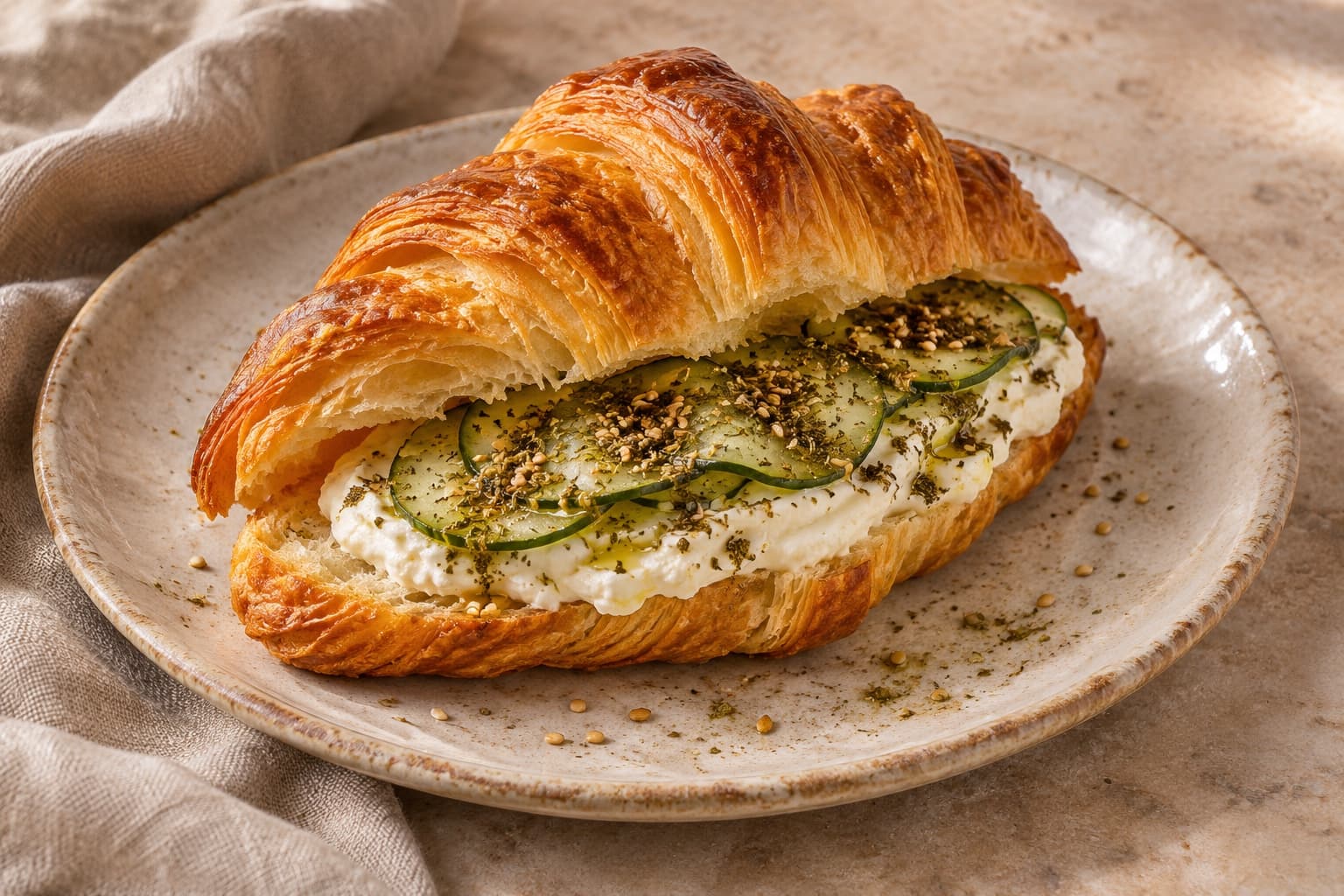
Open a warm croissant with your hands. The crust crackles before you reach the soft middle. Spread a little labneh on one side, sprinkle it with breakfast za’atar, and take a bite. Butter comes first, then the tang of labneh, then a toasted sesame seed. That bite can take you to a French bakery and a Nazareth breakfast table at the same time. LaCafé Nazareth’s weekend special is a croissant with thick labneh, za’atar, and sliced cucumber. Try it at LaCafé, or make the home version in the first recipe below.
What happens when a cook brings home a technique and tries it with a familiar ingredient? Long before the word “fusion” appeared on menus, cooks in Baghdad and al-Andalus left us recipes that show how flavours move. Limor Yungman, Stanford Humanities Center
What was cooking in Baghdad a thousand years ago?
In tenth-century Baghdad, Ibn Sayyar al-Warraq compiled recipes from Abbasid kitchens in the Book of Dishes. One cook whose name survives is Bidʿa. In the household of Ibrahim ibn al-Mahdi, she was known for her sikbaj, a sour beef stew of Persian origin. One dish brings together a cook from Byzantium, a Persian recipe, and an Arabic record. Limor Yungman on medieval Arabic cookbooks
Imagine tasting another dish, Ibrahimiyya. The meat cooked in verjuice, the sour juice of unripe grapes, or vinegar, with coriander, ginger, pepper, cinnamon, and mastic. Sugar took the edge off the acidity and rosewater scented each spoonful. A cook making dinner tonight could recognise that balance. Yungman’s account of Ibrahimiyya
Did Ziryab invent the three-course meal?
Ziryab was a ninth-century musician and singer associated with the court of Abd al-Rahman II in Córdoba. A familiar story credits him with serving soup first, then meat, then dessert. The evidence is too thin to credit him with inventing that order.
Historian Dwight Reynolds compared an eleventh-century account by Ibn Hayyan with al-Maqqari’s seventeenth-century biography. Over time the singer’s legend grew. Recipes leave a trace of their own. A thirteenth-century Andalusian cookbook contains nineteen recipes attributed to the cookbook of Ibrahim ibn al-Mahdi of Baghdad. We can read what travelled, even if we cannot name who carried the copy. Reynolds on Ziryab’s biographies · Yungman on the nineteen recipes
Three ingredients worth tasting on their own
Ask what a familiar flavour from the region smells like and someone might think of sumac on musakhan onions. Someone else will remember cardamom rising from the first pour of coffee. Naming the ingredient and the dish that inspired you tells you what to add and when to stop.
Sumac adds a sour note and keeps the toast crisp. In Palestinian musakhan, it meets onions softened in olive oil. Cook one onion slowly until sweet, divide it in two, and sprinkle one half with sumac. Taste both. The same dry acidity works in a sandwich or across a crisp piece of toast. Sami Tamimi’s Palestinian musakhan
Za’atar can mean the herb or the blend. The blend for man’oushe often includes dried za’atar leaves, sesame, sumac, and salt. Taste yours before adding lemon or salt to the dish. Sprinkle the blend over labneh just before serving to keep the toasted sesame distinct. Ottolenghi’s guide to za’atar
A little cardamom changes the aroma. If you know it from Arabic coffee, try it in warm milk or brioche. Lightly crush a pod, steep it in warm milk, then strain and taste. You can decide how strong you want the aroma before the milk goes into dessert. UNESCO on Arabic coffee
Five recipes that bring two kitchens together
These DAWAQ recipe ideas make about two servings each. The links trace the dishes and techniques that inspired them.
1. Croissant with labneh, za’atar, and cucumber
Warm two plain croissants at 160°C for 4–5 minutes. Let them cool slightly, split them, and divide four tablespoons of thick labneh between them. Pat the thin slices of half a cucumber dry, tuck them inside, and finish with one teaspoon of za’atar across both croissants. Fill after warming to keep the crust crisp and the filling cool. Mohammed’s LaCafé croissant story · King Arthur Baking’s croissant technique
2. Bruschetta with musakhan onions and sumac
Slice a large onion and cook it with two tablespoons of olive oil and a pinch of salt over low heat for 20–25 minutes, until soft and sweet. Take it off the heat and stir in a teaspoon of sumac. Toast four slices of country bread and spoon on the onion just before serving. The top catches the onion oil and the edges stay crisp. Musakhan from Sami Tamimi
3. Soba with tahini, lemon, and mint
Cook 160 g of soba according to the packet. Rinse in cold water and drain well. Whisk two tablespoons of tahini, a tablespoon of lemon juice, and a teaspoon of soy sauce. Add cold water a spoonful at a time until the dressing runs off the spoon. Toss with the noodles, a small cucumber cut into matchsticks, and a handful of chopped mint. Thin the tahini before tossing so the noodles stay separate. Kikkoman’s soba and tahini inspiration
4. Cardamom French toast with date syrup
Heat 100 ml of milk with two crushed cardamom pods until it steams. Steep for five minutes, strain, cool slightly, and whisk with one egg. Dip four small slices of day-old brioche. Cook in a teaspoon of butter on medium-low heat for about three minutes per side, until the centre is set. Save the two teaspoons of date syrup for serving so you can adjust the sweetness and still smell the cardamom. King Arthur Baking’s French toast technique
5. Arabic coffee affogato with cardamom
Make 60 ml of strong, unsweetened coffee with a crushed cardamom pod and strain out the grounds and pod. Put a scoop of vanilla ice cream in each of two chilled cups. Pour half the hot coffee beside each scoop and add a teaspoon of crushed pistachios across the two cups if you like. Bring the coffee in a small jug and let everyone pour their own. The first spoonful gives you hot coffee and cold ice cream together. UNESCO on Arabic coffee
If you make one thing tonight, start with the musakhan onion bruschetta. You need an onion, a loaf, and a little patience. Taste the onion before and after adding sumac, then bite the crust before it soaks up the oil. You’ll taste what each kitchen brought to the dish and know what you want to make again.
Where to go next
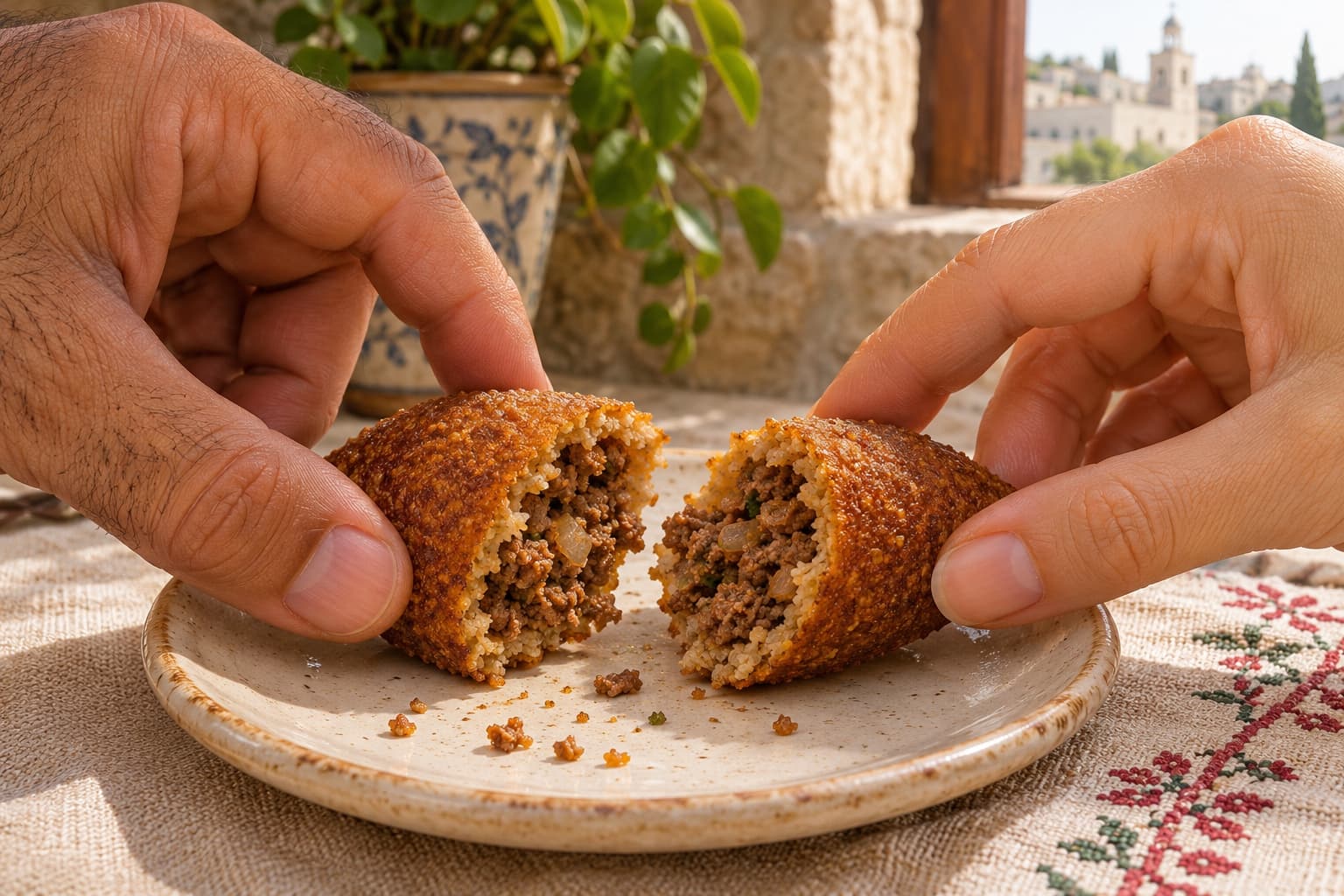
Who gets the last kibbeh? Ziryab and table manners from Córdoba to Nazareth
One kibbeh is left on the plate. Ziryab’s glass in Córdoba, al-Jahiz’s sharp eye, and a Nazareth lunch show how much can happen around a shared dish.
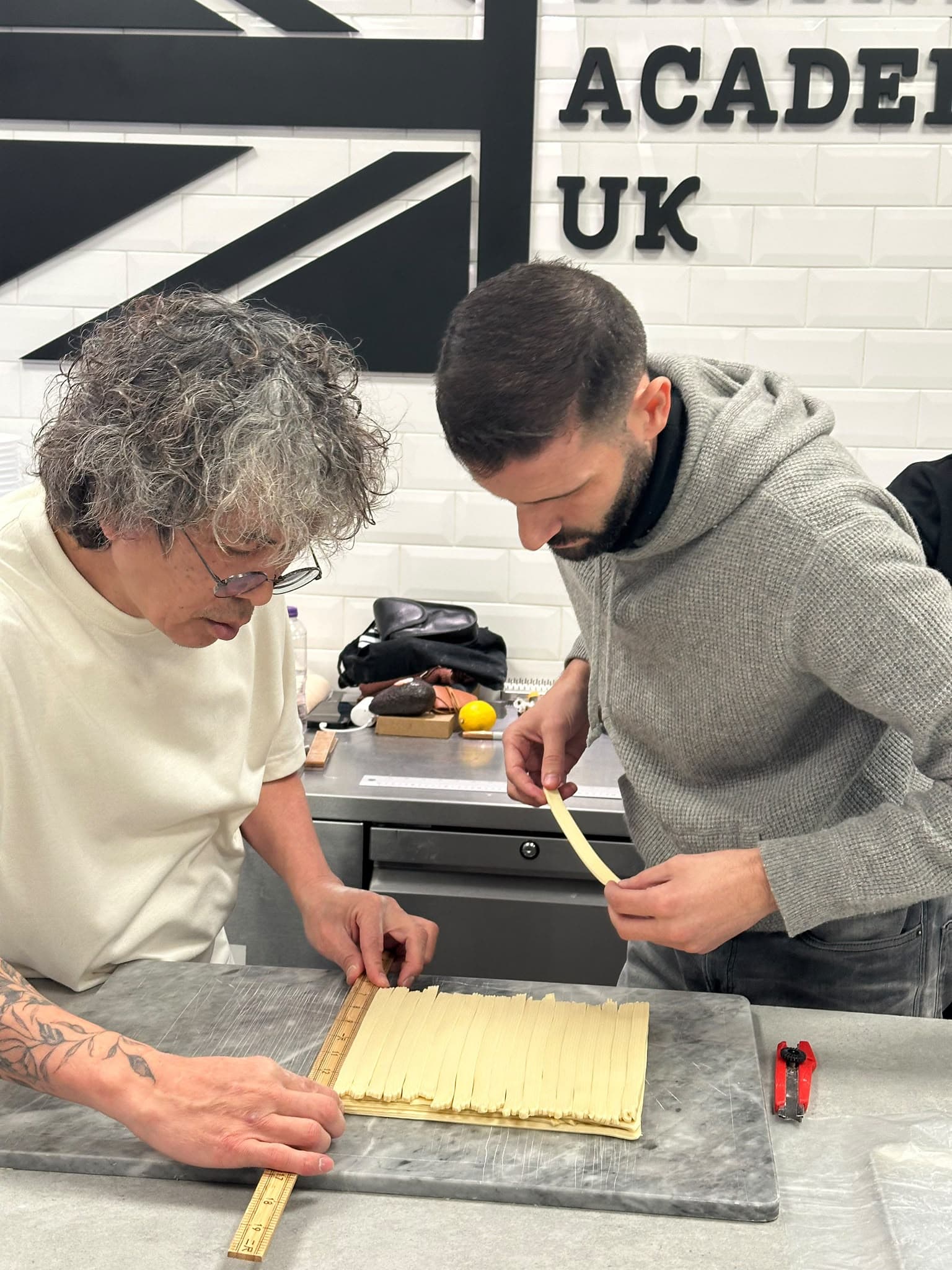
From Nazareth to Britain for a better croissant: Mohammed Zoabi’s journey and LaCafé’s ambition
One croissant, two days of learning, and an ambition that comes home to Nazareth. Join Mohammed Zoabi’s exploration of laminated pastry with Oldman Teh.